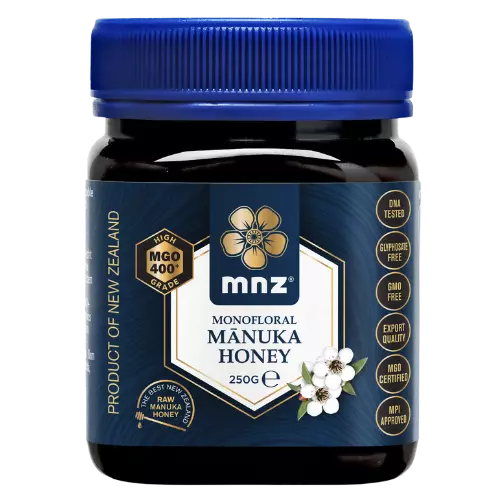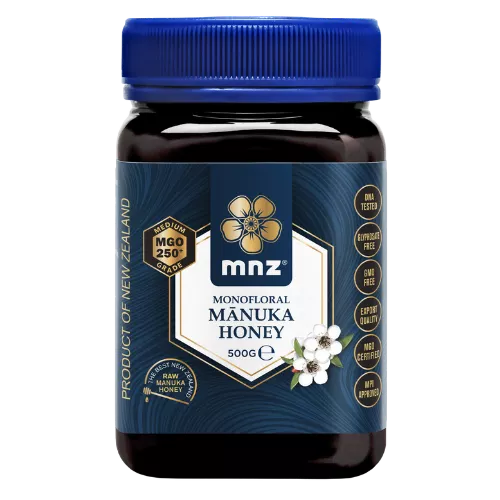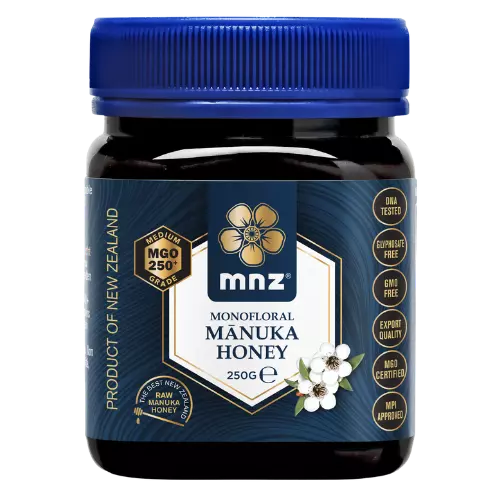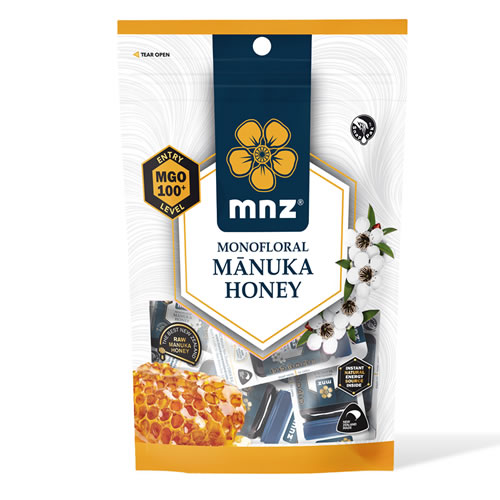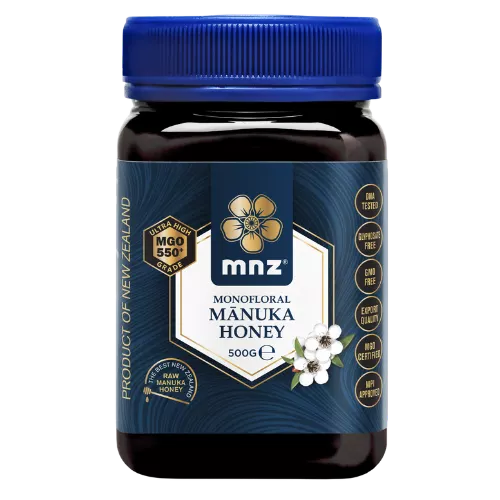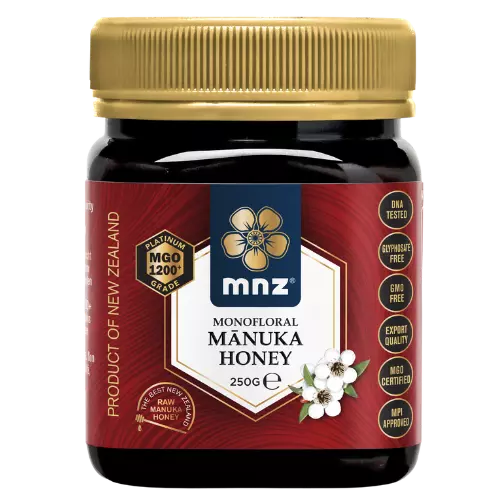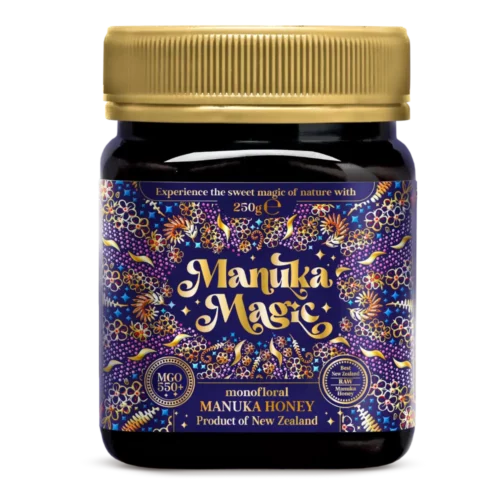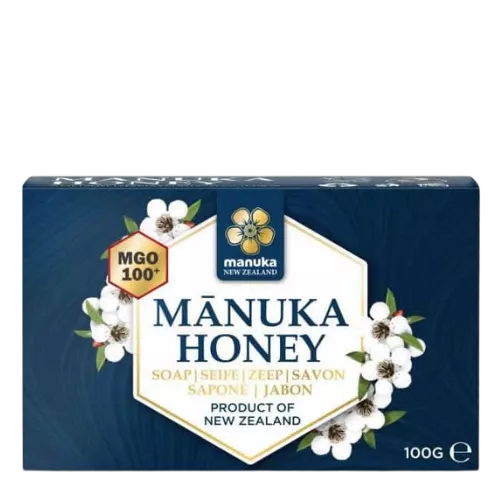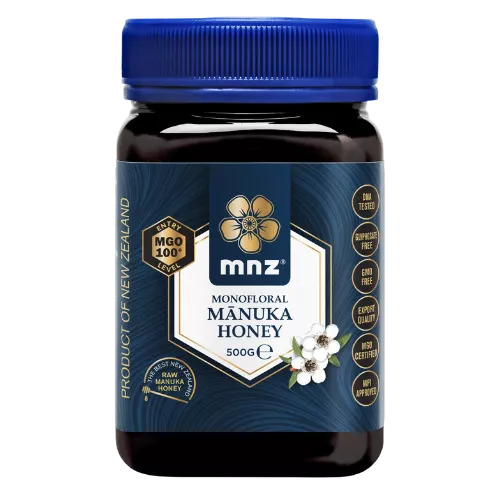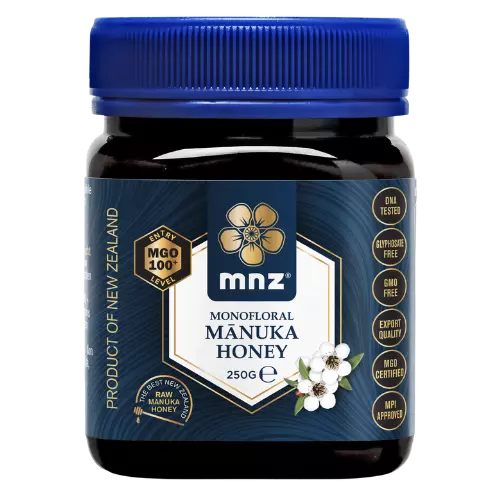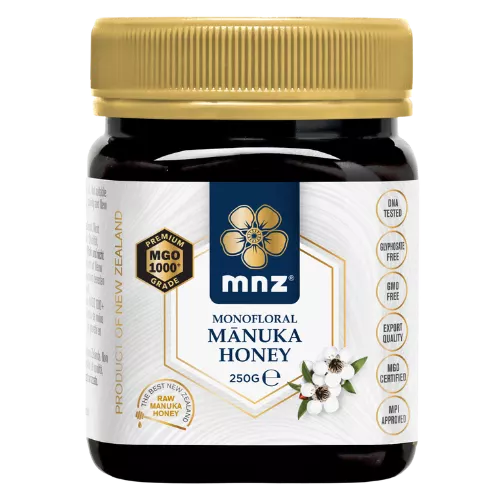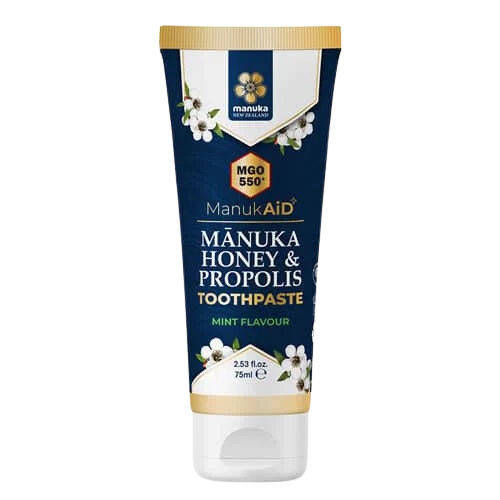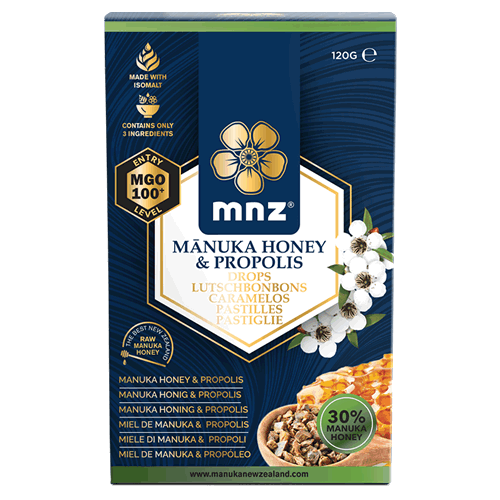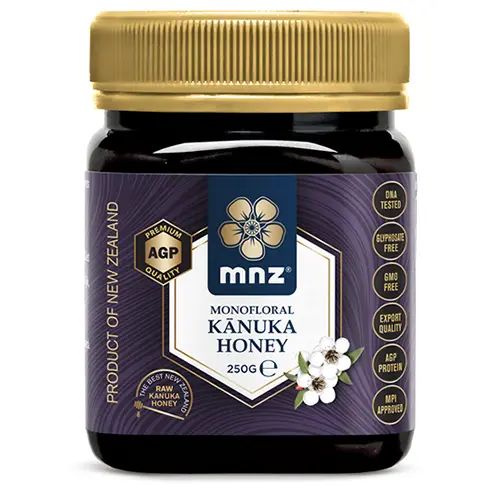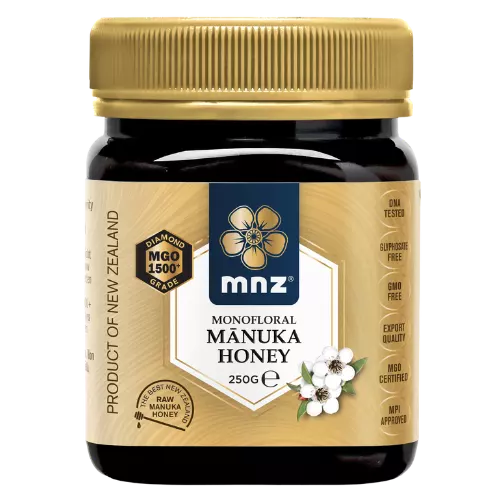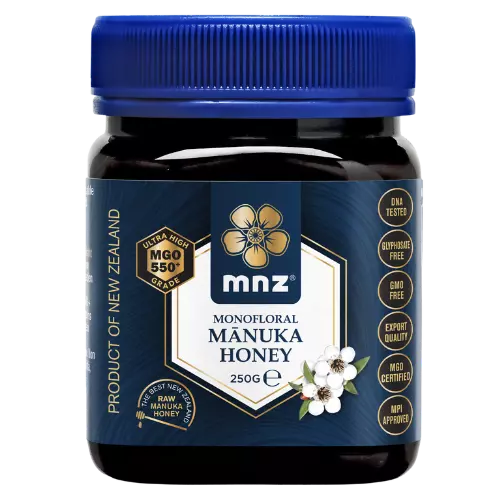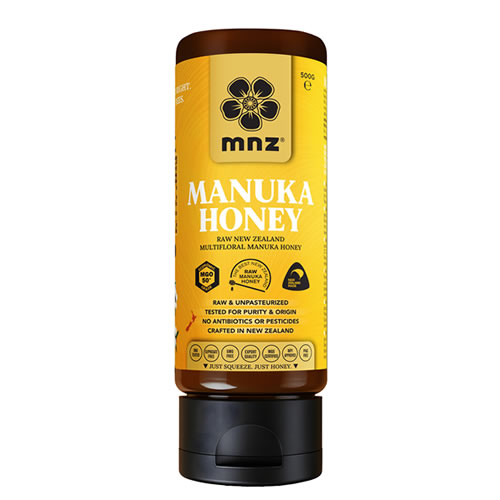












¿Qué es la miel de Manuka?
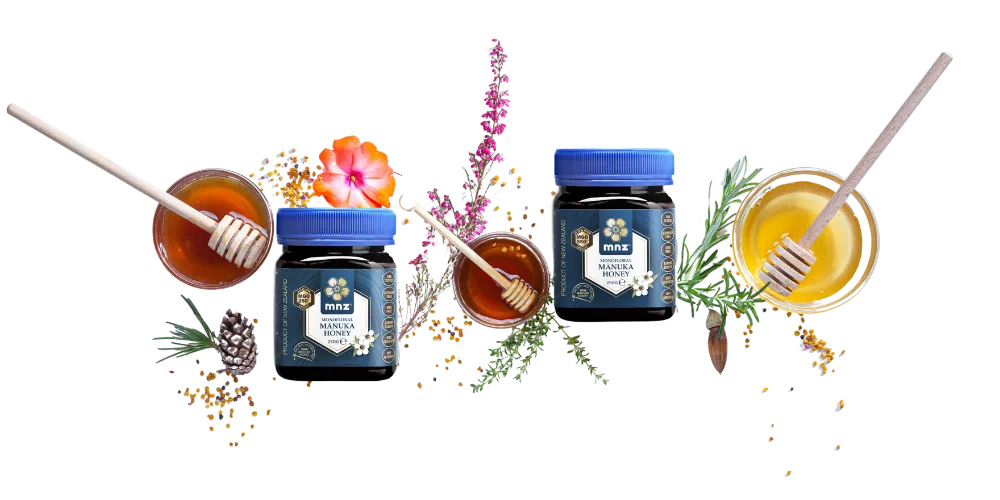
La miel de Manuka se produce en Nueva Zelanda por abejas que recolectan néctar de la planta autóctona Manuka (Leptospermum scoparium). Es uno de los tipos de miel más investigados y es apreciado por su composición natural distintiva.
Esta miel tan especial se recolecta durante un breve periodo de floración cada año, cuando la planta de Manuka florece durante solo unas pocas semanas. El néctar contiene compuestos naturales que le dan a la miel de Manuka su perfil característico y la diferencian de otras mieles.
Las cualidades únicas de la miel de Manuka están estrechamente relacionadas con el entorno aislado de Nueva Zelanda. El aire limpio, los paisajes vírgenes y las diversas condiciones climáticas han dado forma a una flora autóctona resistente, incluida la propia planta de Manuka. Estas condiciones naturales contribuyen al carácter distintivo y la complejidad de la auténtica miel de Manuka de Nueva Zelanda.
¿Para quién es?
La miel de Manuka de Nueva Zelanda es un alimento natural apreciado por su composición distintiva y sus estándares de calidad cuidadosamente verificados. Puede disfrutarse como parte de una dieta equilibrada por adultos y niños mayores de 1 año.
Al igual que todas las mieles, la miel de Manuka contiene azúcares naturales y debe consumirse con moderación. Las personas que controlan su consumo de azúcar deben tenerla en cuenta dentro de su dieta general.
La miel de Manuka también se usa comúnmente en el cuidado de animales, dependiendo de las circunstancias individuales. Al igual que con cualquier cambio en la dieta, se recomienda consultar con un profesional calificado cuando sea necesario.
¿Por qué miel de Manuka cruda?
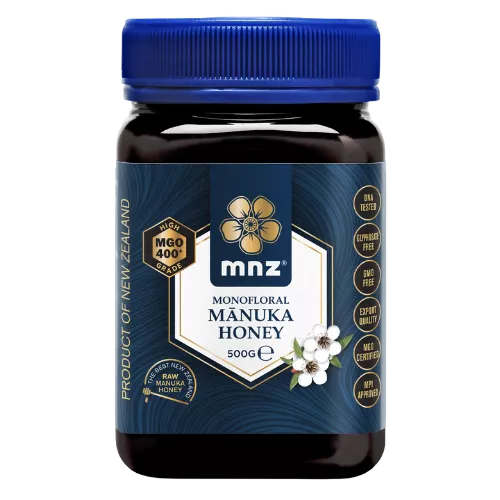
La miel de Manuka cruda se mantiene lo más cerca posible de su estado natural. No se pasteuriza ni se filtra, y se manipula con cuidado para conservar sus características, textura y sabor naturales.
Al no estar sometida a altas temperaturas, la miel de Manuka cruda conserva sus componentes naturales y su perfil distintivo. Suele tener una consistencia más espesa, puede desarrollar una fina cristalización natural con el tiempo y ofrece un sabor rico y aromático.
Lee más sobre la diferencia entre la miel cruda y la miel cremosa.