





What is Manuka Honey?

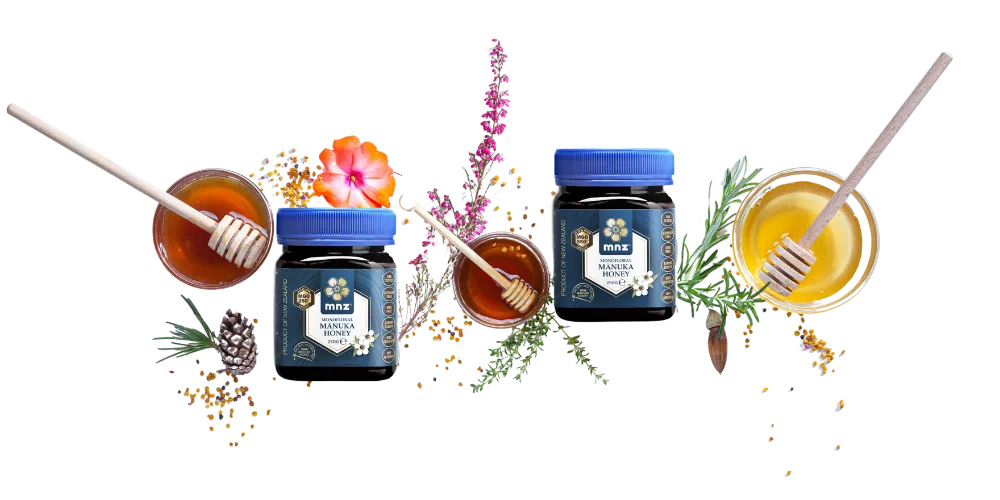
Manuka honey is produced in New Zealand by bees that collect nectar from the native Manuka plant (Leptospermum scoparium). It is one of the most extensively researched types of honey and is valued for its distinctive natural composition.

This rare honey is harvested during a short flowering period each year, when the Manuka plant blooms for only a few weeks. The nectar contains naturally occurring compounds that give Manuka honey its characteristic profile and set it apart from other honeys.

The unique qualities of Manuka honey are closely linked to New Zealand’s isolated environment. Clean air, unspoiled landscapes and diverse climatic conditions have shaped a resilient native flora, including the Manuka plant itself. These natural conditions contribute to the distinctive character and complexity of genuine New Zealand Manuka honey.

Who is it for?

New Zealand Manuka honey is a natural food valued for its distinctive composition and carefully verified quality standards. It can be enjoyed as part of a balanced diet by adults and children over 1 year of age.

Like all honey, Manuka honey contains naturally occurring sugars and should be consumed in moderation. Individuals who monitor their sugar intake should consider it within their overall dietary management.

Manuka honey is also commonly used in animal care, depending on individual circumstances. As with any dietary change, personal advice from a qualified professional is recommended where appropriate.

Why raw Manuka honey?

Raw Manuka honey is kept as close as possible to its natural state. It is unpasteurised, unfiltered and gently handled to preserve its natural character, texture and flavour.

Because it is not subjected to high heat, raw Manuka honey retains its naturally occurring components and distinctive profile. It typically has a thicker consistency, may develop a fine natural crystallisation over time, and offers a rich, aromatic taste.

Read more about the difference between raw and creamed honey.

What does MGO (Methylglyoxal) mean?

MGO stands for Methylglyoxal, a naturally occurring compound found in Manuka honey. The level of MGO is one of the key factors used to classify and verify the strength of Manuka honey.

Methylglyoxal forms naturally over time from DHA (dihydroxyacetone), a compound present in the nectar of the Manuka flower. During the maturation process of the honey, DHA gradually converts into MGO, contributing to the distinctive profile of genuine Manuka honey.

Which product is right for me?

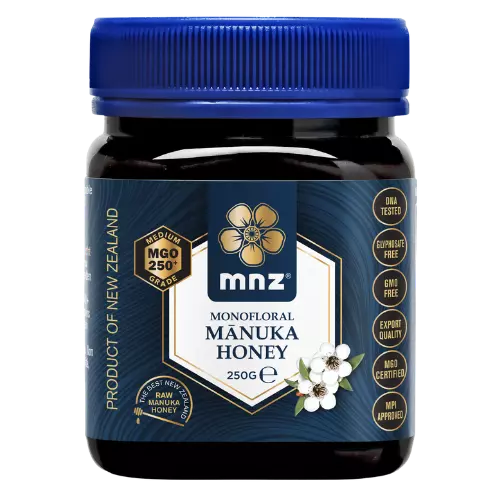
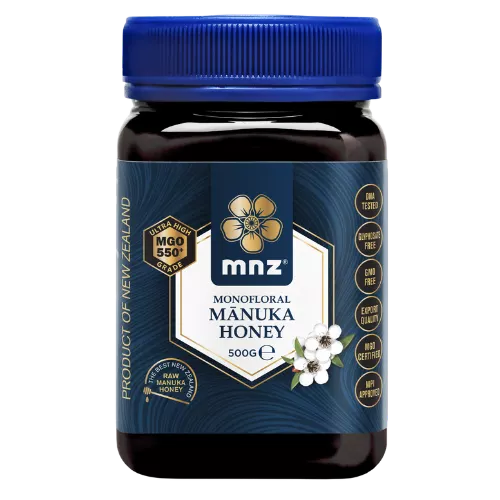
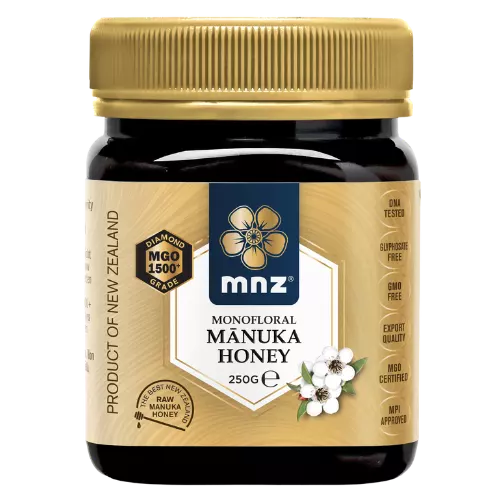
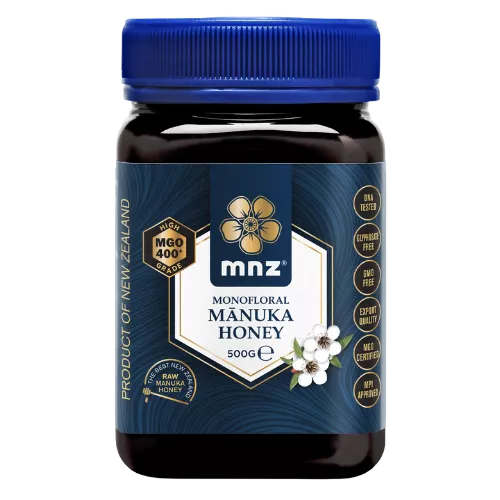
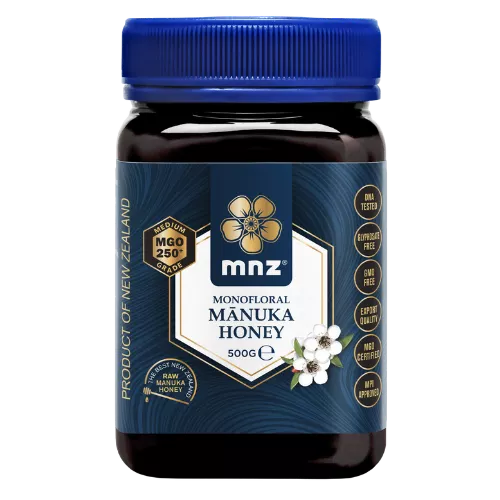
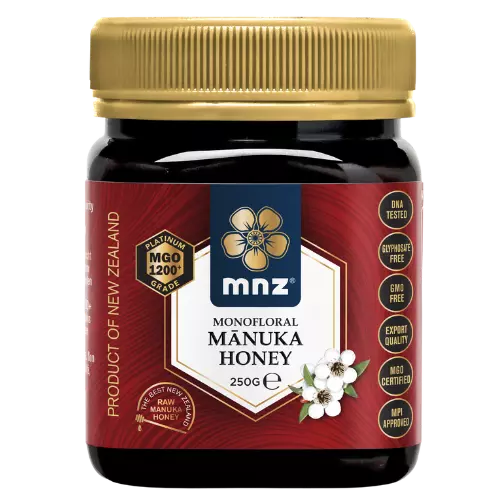
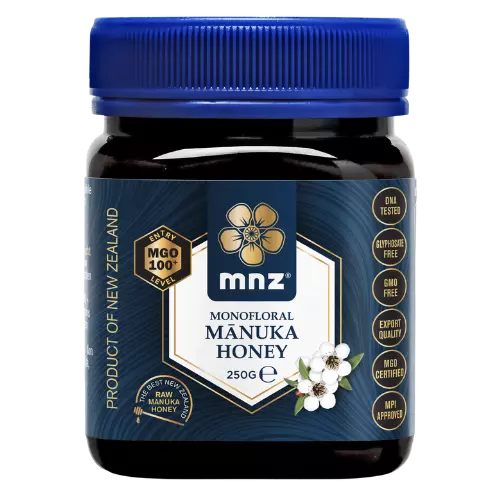
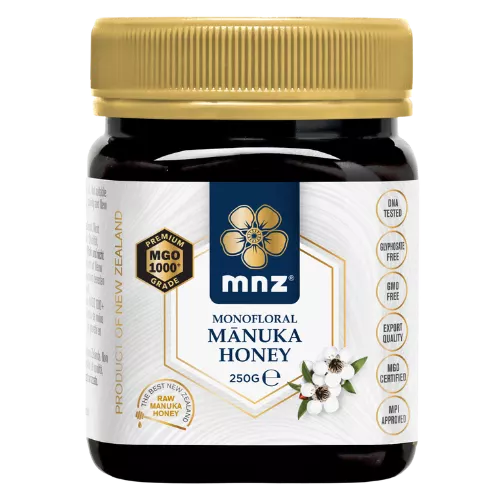
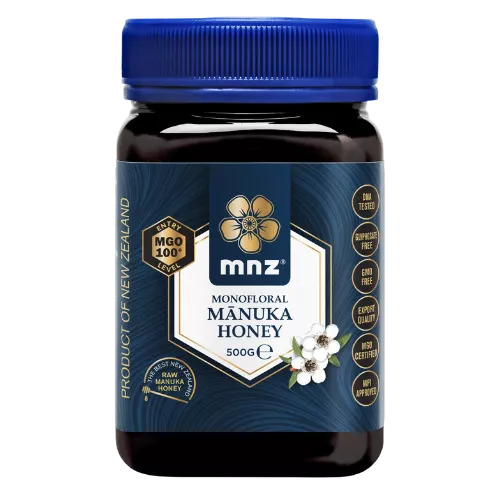
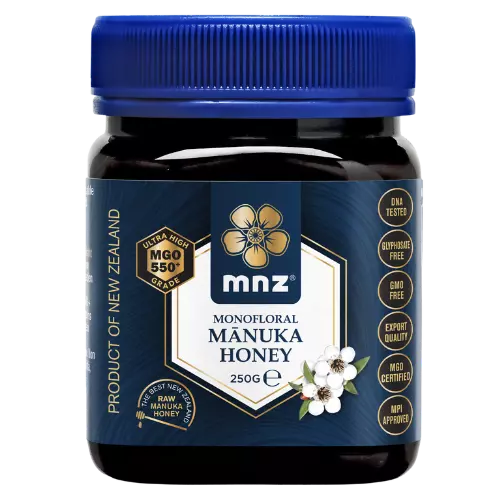
Here at MNZ we have a handy tip for anyone who wants to use Manuka Honey; the higher the MGO value, the more powerful the high-quality and natural bioactivity. All MGO values ​​of Manuka honey are suitable for anyone aged 1 year or older. The body does NOT have to get used to higher MGO values, that’s a myth. All MNZ products fit into your daily health routines; both active and passive. It is an optimal support for the body. MGO 100+; for daily use during breakfast. MGO 250+; for daily use with limited support for the stomach and intestines. Ideal for athletes. MGO 400+; mild support for stomach and intestines; ideal for the skin and small wounds and perfect support during the winter months. MGO 550+; powerful support for stomach and intestines such as with heartburn; ideal for skin conditions and wounds that will not close. MGO 1000+; very high grade natural bioactivity and support for the body. MGO 1200+ & MGO 1500+; special high-quality natural bioactivity and powerful natural support for stomach and intestines; ideal for problem skin. All of the above MGO values ​​are ideal to eat straight from the spoon on an empty stomach or dissolved in lukewarm water.

How do I use Manuka Honey?

Manuka honey can be enjoyed in many ways. It can be taken directly by the spoon, added to warm water, stirred into tea, or mixed into yoghurt, smoothies or breakfast dishes.

Some people also use Manuka honey as part of their skincare routine by applying it externally to clean skin. As with any topical product, individual experiences may vary.

What is known about Manuka Honey?

Manuka honey has been the subject of scientific research since the late 20th century. Researchers have studied its distinctive composition and naturally occurring compounds.

In 2006, Professor Thomas Henle and his research team at the Technical University of Dresden identified methylglyoxal (MGO) as one of the key naturally occurring compounds contributing to the unique chemical profile of Manuka honey.

Earlier research by Professor Peter Molan at the University of Waikato helped bring international attention to the distinctive characteristics of Manuka honey. His work laid the foundation for further scientific investigation into its composition and quality markers.

Since then, numerous peer-reviewed studies have examined the chemical structure and measurable components of Manuka honey.

Does Manuka Honey Have a Bioactive Profile?

Manuka honey is recognised for its measurable levels of naturally occurring MGO. Scientific research has shown that the concentration of MGO can be quantified and used as a classification marker.

Ongoing research continues to explore the natural composition of Manuka honey and the role of its unique compounds within its overall profile.

MNZ PRODUCTS

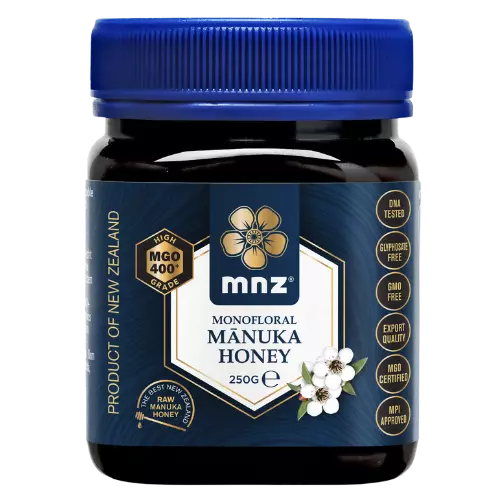
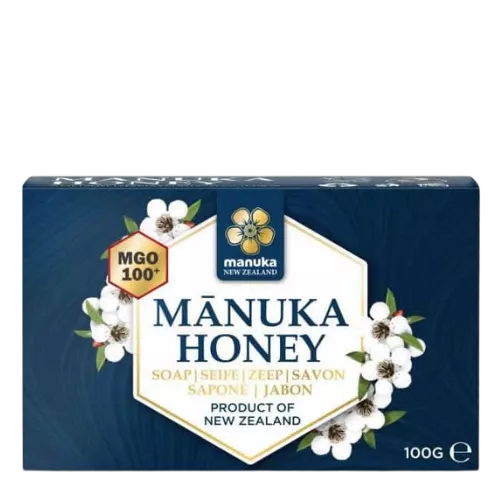
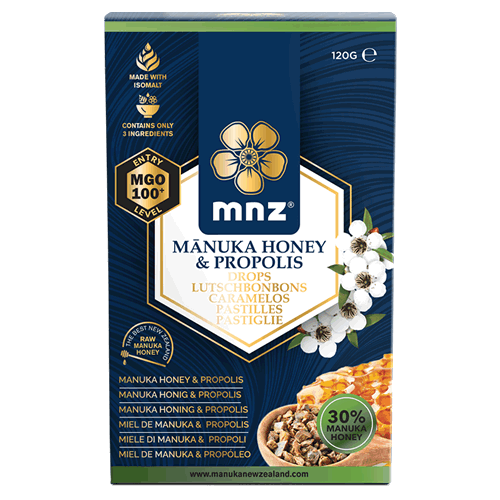
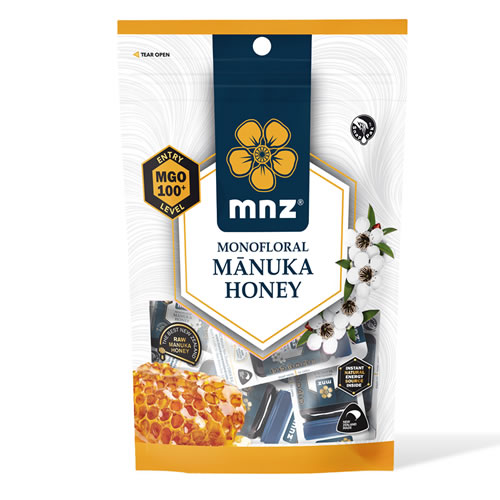
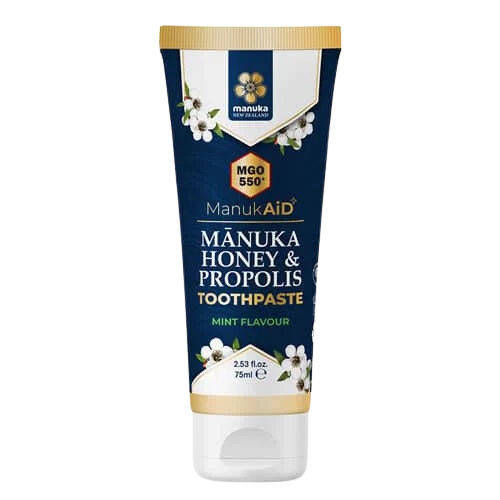
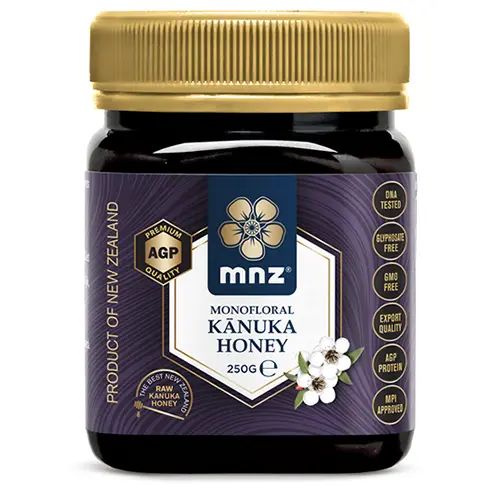
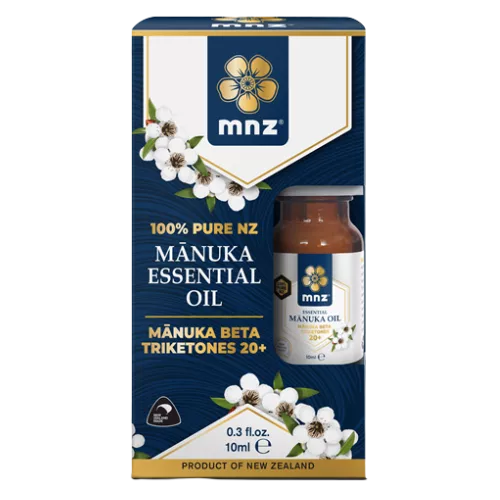
All MNZ products are made with our own high grade raw Manuka Honey.

Is Manuka Honey Healthy?

Honey has been enjoyed for centuries as part of a balanced diet. Raw Manuka honey is valued for its natural composition and distinctive character.

Because it is unpasteurised and minimally processed, raw Manuka honey retains its naturally occurring components and enzymes. It is typically thicker in texture, may develop a fine natural crystallisation over time, and is appreciated for its rich aroma and full flavour profile.

What is Manuka Honey Good For?

Manuka honey is most commonly enjoyed as a natural food. It can be taken by the spoon, added to warm water, mixed into tea or incorporated into meals and smoothies.

Some people also use Manuka honey as part of their skincare routine by applying it externally to clean skin. As with any natural product, usage may vary according to personal preference.

Manuka honey is recognised for its measurable MGO content, which gives it its distinctive profile compared to other types of honey.

Is Every Manuka Honey Real Manuka Honey?

No. Authentic New Zealand Manuka honey is limited in production and must meet strict scientific criteria defined by the New Zealand Ministry for Primary Industries (MPI).

All raw Manuka honey from MNZ undergoes comprehensive authenticity and quality testing before release. Each batch is verified for origin, purity and MGO level. You can read more about our standards on the MNZ Quality Guarantee page.

Is Manuka Honey Raw by Definition?

No. Manuka honey can be processed or creamed depending on the producer. MNZ produces exclusively raw, unfiltered and unpasteurised monofloral Manuka honey.

What is the difference between creamed Manuka honey and raw Manuka honey?

Raw Manuka honey is kept as close as possible to its natural state. It is unpasteurised, minimally processed and gently handled. Over time, raw honey naturally crystallises; this is a normal and natural process.

Honey is a supersaturated sugar solution, containing more dissolved sugars than water can hold at room temperature. In the warm hive (around 35°C), these sugars remain dissolved. At lower temperatures, glucose begins to crystallise, which causes the honey to thicken or solidify.

Crystallisation may appear uniform or form natural layers. Crystal size varies depending on the honey’s natural composition and origin. Crystallised honey may look lighter and more opaque, which is completely natural. Gentle warming below 35°C will gradually return it to a smoother texture without affecting its natural characteristics.

Raw Manuka honey is traditionally extracted by centrifugation. Larger wax particles are removed and the honey is lightly filtered without heat treatment. This preserves its natural texture, aroma and composition.

Creamed Manuka honey, by contrast, is mechanically stirred under controlled conditions to create a smooth and uniform texture. This process influences the crystal structure, resulting in a consistently soft and spreadable honey.

Characteristics of raw Manuka honey
• Naturally thick consistency
• May develop fine crystallisation over time
• Rich aroma and full flavour profile
• Minimally processed and unpasteurised

The four production steps of raw MGO Manuka honey:
Step 1 – Cold extraction (maximum 35°C) from the honeycomb
Step 2 – Collection in large honey barrels
Step 3 – Light filtration to remove wax residues
Step 4 – Filling into jars without pasteurisation or heat treatment

MNZ produces exclusively raw honey

MNZ produces only raw, unfiltered and unpasteurised monofloral Manuka honey. All products are produced, processed and packaged in New Zealand using BPA-free packaging.

Creamed Manuka Honey
Manuka honey can be mechanically processed to create a smooth, uniform texture. This process is commonly referred to as “creaming” or controlled crystallisation.

During creaming, liquid honey is stirred under controlled temperature conditions to manage crystal formation. Fine “seed honey” containing very small crystals is blended with liquid honey to guide the crystallisation process. The result is a honey with uniformly small crystals (typically less than 25 microns), giving it a smooth, spreadable consistency.

The process is carefully temperature regulated, usually between 16–18°C, which is considered optimal for controlled crystallisation. Stirring may take place over several days to achieve the desired texture. The goal is to encourage many small crystals while preventing the formation of larger, coarse crystals.

Some producers may gently warm honey prior to processing to liquefy existing crystals and achieve a uniform starting point. After stirring and controlled cooling, the honey develops a stable, creamy texture that remains smooth for an extended period when stored consistently.

The typical production steps of creamed Manuka honey:
Step 1 – Gentle warming to liquefy existing crystals
Step 2 – Collection and preliminary filtration to remove wax residues
Step 3 – Addition of fine seed crystals
Step 4 – Controlled stirring and aeration under regulated temperatures
Step 5 – Cooling to encourage uniform crystallisation
Step 6 – Filling into jars once the desired texture is achieved

Creamed Manuka honey is valued for its smooth, spreadable consistency. In contrast, raw Manuka honey is minimally processed and allowed to crystallise naturally over time, resulting in a thicker, more traditional texture.